

A temporary redirect where a permanent one belongs. Found by Redirect checker →redirect loop
The URL redirects back to itself and never settles. Found by Redirect checker →
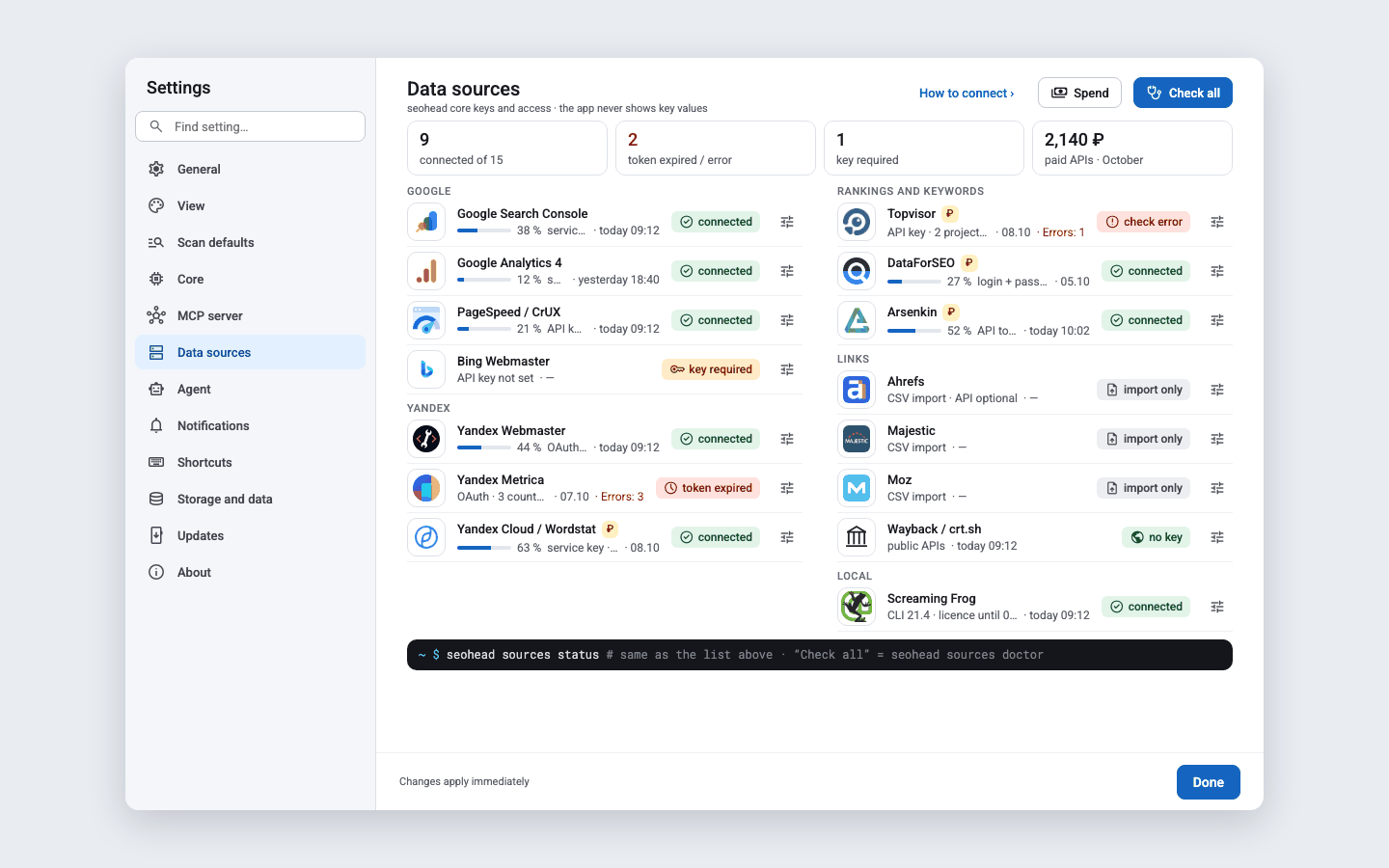
Google Search Console integration
Query Search Console, archive its data locally and join it with crawl evidence per URL.
Google Search Console integration
Local history
Provider data is stored locally with history and joins; nothing is sent to a hosted service.
Google Search Console integration
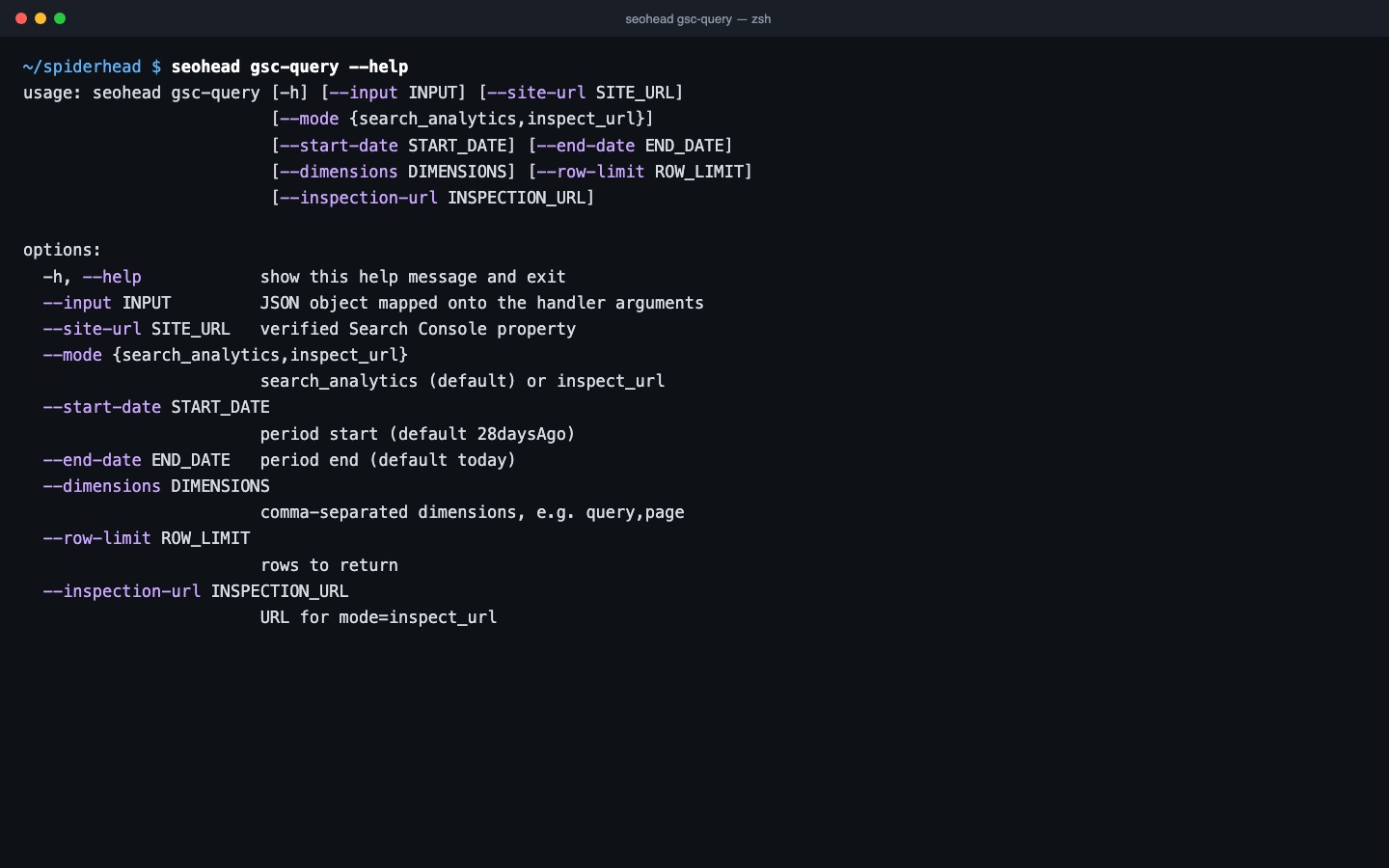
URL inspection
inspect-url runs a bounded set of checks for one URL; indexing outcomes stay separate.
Three steps, one saved scan
Connect one read-only grant
Connect a read-only Google grant for a property you own. Check its status at any time.
Archive it locally
Queue a date range and run it in small, bounded batches into a SQLite file on your machine. Re-runs fetch only the missing days.
Join it to each URL
Clicks, impressions, position and CTR join to crawl pages by URL. Google's own index verdict for one URL stays on its own line.
One command
seohead gsc-query --site-url sc-domain:example.com --start-date 2026-09-01 --end-date 2026-09-30Install first: installation guide. Every command also runs as an MCP tool for AI agents.